Showing posts with label india. Show all posts

Sunday, 15 August 2010

Michael Huggan’s Photographic Exhibition in Alton Opened by Dr Mike Maloney OBE

 
Alton Town Mayor and Mayoress, Councillor David Willoughby and Mrs Margaret Willoughby, as well as the former president of the Royal Photographic Society, John Page, attended the grand opening of Michael Huggan’s ‘Wildlife and Wild Places’ photographic exhibition
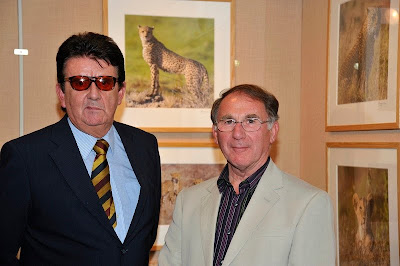
Mike Maloney with Michael HugganLeft to right: Mike Maloney with Michael Huggan

Alton, Hampshire – ‘Wildlife and Wild Places’, the latest photographic exhibition of distinguished and award-winning wildlife photographer, Michael Huggan, was officially opened by Dr Mike Maloney OBE on 6th August 2010. The free exhibition is being held at The Allen Gallery in Alton, Hampshire, until 5pm 28th August 2010.

Dr Mike Maloney OBE, Britain’s most decorated press photographer, was delighted to have been invited to open the exhibition by Michael Huggan ARPS (Royal Photographic Society Associate with Distinction) whom he said in his opening speech, was the best wildlife photographer he knows.

Alton Town Mayor and Mayoress with Michael HugganAlton Town Mayor and Mayoress with Michael Huggan

The exhibition is called ‘Wildlife and Wild Places’ because Michael’s photography has grown from purely wildlife to everything that surrounds it. It includes stunning photographs taken in Africa, India, America and the Camargue in France, of not only the wildlife but also the locations, people and their environment.

Dr Mike Maloney OBE, in his opening address, said:

“When you commission Michael Huggan, you know you will receive a higher standard of image than most photographers can achieve. Michael really understands how to capture that perfect shot.”

Also on display was Michael Huggan’s 2011 calendar, considered by Dr Mike Maloney to be the best wildlife calendar he had ever seen.

‘Wildlife and Wild Places’ is now on at The Allen Gallery, Church Street, Alton, Hampshire, GU34 2BW Tel 0845 603 5635, until 5:00pm Saturday 28 Aug 2010. Admission is free.
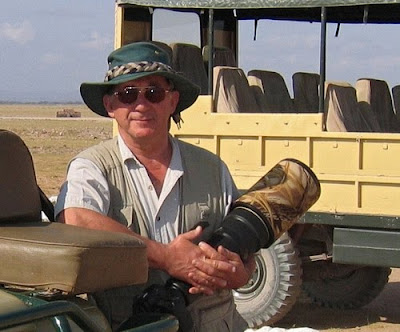
Michael Huggan, Wildlife Photographer
About Michael Huggan
Long-time Nikon user and Royal Photographic Society Associate with Distinction (ARPS), Michael Huggan lives in Four Marks, Hampshire. His photographic experience covers a wide range of subjects but he is most well known for his wildlife work, for which he has won many awards including a gold medal from the Royal Photographic Society and a bronze medal from the Photographic Society of America. His limited edition and exhibition-range framed pictures, note cards and his 2011 calendar can be viewed and purchased from http://www.michaelhuggan.com.

For more information, please contact:
Michael Huggan, ARPS
Michael Huggan Photography
Cranford House
Alton Lane, Four Marks
Alton
Hampshire
GU34 5AJ

+44(0)7860 280097
michael@michaelhuggan.com
http://www.michaelhuggan.com

Sunday, 11 July 2010

New Delhi to Ranthambore - the conclusion

 
Rajasthan, episode 7


This will be the last blog post on our travels from New Delhi to Ranthambore. After Ranthambore, we remained in Rajasthan on the edge of the Great Thar desert at Roop Niwas and Dundlod, the HQ of the 81st Endurance event. For those of you who have not seen my web site, I would urge you to do so. There are many images showing what a wonderful place India is – you must go there.

There are a number of people I would like to thank for ensuring our stay and travels through Rajasthan were as stress free as possible. The first is ‘Jaipal Singh’ our driver. For two weeks, Jaipal drove us from New Delhi, Agra, Ranthambore, Japur, Roop Niwas, Dunlod and back to New Delhi. Not once did he miss a beat. His driving was impeccable and even Memsahib felt comfortable the whole trip.

Jaipal works for ‘Royal Expeditions', the company that organized all our hotels, city guides, and anything else you can think of. One example of customer service: When we were in Jaipur, I realized I had left my jacket in the hotel at Ranthambore, some 4 hours driving distance. I mentioned this to our driver, Jaipal, and he phoned Royal Expeditions HQ to see what could be done. This was at 9.00am in the morning. By the time we returned to the hotel in the evening, about 6.00 pm, my jacket was waiting for me in reception. I was amazed! A young man was sent on the train from Jaipur to Ranthambore and back to collect my jacket – at no cost to me. WOW, what about that for service?

Royal expeditions can be contacted at http://www.royalexpeditions.com/. Please use them if you are travelling anywhere in India.

The person who was primarily responsible for our trip was Caroline Moorey. Caroline is chair of the "Friends of Marwari / Kathiawari Horse UK" and one of the GB Team riders. Please support this web site http://www.friendsofmarwari.org.uk/ there is lots of information about the indigenous horse breeds in India.

I leave you with a few pictures of Indian transport. The pictures bring a smile to my face every time I see them. I trust you have enjoyed our Rajasthan blog series over the last few months.


Rajasthan, episode 6: Tigers and Ranthambore
 

Friday, 4 June 2010

Distinguished Photographer Michael Huggan Puts On ‘Wildlife and Wild Places’ Exhibition throughout August 2010

Cheetah on a termite mound in Africa

Official opening of the exhibition at The Allen Gallery, Alton, Hampshire, will be by Britain’s most decorated press photographer,
Dr Mike Maloney OBE, on 6th August 2010

Hampshire – Throughout the month of August 2010, award-winning Hampshire-based wildlife photographer, Michael Huggan, Royal Photographic Society Associate with Distinction (ARPS), will be exhibiting a collection of his photographs at The Allen Gallery, Alton, Hampshire. The free exhibition is entitled, “Wildlife and Wild Places’.

Dr Mike Maloney OBE, Britain’s most decorated press photographer, will be officially opening the exhibition at 7:00pm on Friday 6th August 2010 (by invitation only).

Kathawari stallion, Rajasthan

“The Allen Gallery serves the local community and promotes different skills locally. As a local photographer, I was extremely happy to be asked to display my pictures for the month of August. I decided to call the exhibition ‘Wildlife and Wild Places’ because my photography has grown from purely wildlife to everything that surrounds it. Of the places I have visited (Africa, India, the Camargue in France and parts of the American dessert), one must take into account the locations, people and their environment. All these elements, together, make the final picture,” explains Michael.

On display will be images, canvas prints and cards of locations, wildlife and customs of Africa, India and the US. The exhibition will also include images of ‘Marwari’ horses in India and of the American Mustang horses of New Mexico.

‘Wildlife and Wild Places’ is on at The Allen Gallery, Church Street, Alton, Hampshire, GU34 2BW Tel 0845 603 5635, from 10:00am Tuesday 03 Aug 2010 to 5:00pm Saturday 28 Aug 2010. Admission is free.

Michael Huggan

About Michael Huggan
Long-time Nikon user and Royal Photographic Society Associate with Distinction (ARPS), Michael Huggan lives in Four Marks, Hampshire. His photographic experience covers a wide range of subjects but he is most well known for his wildlife work, for which he has won many awards, most notably a Royal Photographic Society gold medal in 2007. His photography, available as limited edition pictures, calendars, note cards and exhibition-range framed pictures can be viewed at http://www.michaelhuggan.com/assignments.php. Michael also recently launched a new instructional website for budding wildlife photographers: http://www.wildlifephotographyinfo.com. Michael is a supporter of the Born Free Foundation.

For more information, please contact:

Michael Huggan, ARPS
Michael Huggan Photography
Cranford House
Alton Lane, Four Marks
Alton
Hampshire
GU34 5AJ

01962 773697
michael@michaelhuggan.com
http://www.michaelhuggan.com

Submitted by:
John Wood
+44 777 152 0001
jw@worldwidepr.net
http://www.worldwidepr.net
http://twitter.com/worldwidepr

Thursday, 27 May 2010

Tigers and Ranthambore

 
Tiger emerging from the bush

Rajasthan, episode 6

On arrival at our lodgings at Tiger Den, adjacent to Ranthambore National Park, we were rushed into the Jeep and sped off into the bush. Tigers had been sighted and we were late!

Tigers are one of the species I was yet to see in the wild, so my level of expectancy was high. However, I am also a realist. Ranthambore is vast and, with only forty tigers reported to live in this section of the reserve, I was under no illusions about seeing one. I have spoken to many fellow travelers who had not seen a tiger when visiting Ranthambore.

We booked four separate trips to the reserve traveling by private jeep. It is essential to book months in advance and payment is also required at the same time to guarantee entry to the reserve. The reserve is split up into four zones and each vehicle is allocated a zone when they enter the park. Your zone is selected by random with a computer, so, if you get a zone where tigers have not been seen, and may not be there, you just have to hope something else will come along.

On our first trip into the reserve we headed off to a spot where two tigers had made a kill and were still feeding off the carcass. We traveled through the reserve on dusty tracks only to be confronted by a traffic jam of Jeeps, Canters (16 to 20-seat safari buses) and other vehicles all trying to see a tiger.

This image should give you an indication of what happens when everybody heads for the same spot!


I managed to get a glimpse of a tiger in the bush and get a couple of pictures, not to my liking, but I saw the tiger.

Over the following two days, we had success in seeing two more tigers together and managed to get a few shots feeding on a carcass. The last morning, we were directed into a zone where tigers had not been seen. So, with an open mind, we spent our time visiting various locations of the reserve. WOW what a place. We travelled through the reserve past lakes, wetlands, scrub, seeing the most wonderful scenes populated by Samba deer, Chittal deer, amazing bird life and Black-face monkeys, running around the ramparts of the fort.

The following images should give you an indication of the diversity of wildlife that inhabits the reserve, as well as the tigers.

I did not get my ‘perfect’ tiger picture, but I have never achieved my perfect picture in Africa and elsewhere. One day I will return to India and see if I can get my ‘Perfect’ picture. Until then, enjoy the pictures.

Tiger feeding on the buffalo carcass

View over the lake

Black-faced Langur monkeys

Chittal deer

Samba male deer tangling horns

Ranthambore Fort

Mongoose

Snake eagle

Our Jeep with Devendra, our guide


Monday, 19 April 2010

Majestic - Magnificant the Taj Mahal

.
The impact of this picture is amazing

Rajasthan, episode 4

Leaving Delhi for Agra, we were on our way to see the Taj Mahal. Whilst I have seen many pictures of the Taj Mahal in books and magazines, none of them can do justice to seeing this monument for the first time. It is stunning.

We visited late in the afternoon to get that soft warm glow that works so well on any number of subjects. Wherever you stood, there seemed to be a glow radiating from the structure. This is the most amazing building I have ever seen. There is something very special about this place that it is difficult to describe. I list a few facts if only to remind me when it was built and how long it took:

  • The Taj Mahal is a mausoleum. It was commissioned by Mughal Emperor Shah Jahan for his favourite wife, Empress Mumtaz Mahal, who died in 1631. So great was the Shah Jahan’s love for his wife Mumtaz, that he ordered the building of the most beautiful mausoleum on Earth for her, The Taj Mahal.
  • Construction of the tomb started in 1632, and was completed in 1648. It took 22 years to complete, and an extra 5 years for the garden, with the help of 20,000 workers.
  • The Taj Mahal is built from precious white marble with delicate mosiac, with inlaid precious stones. Almost every surface of the entire building has been decorated, and every detail is symmetrical. The mosaic designs are based on three decorative elements - calligraphy, abstract geometric and vegetative motifs. The exterior decorations of the Taj Mahal are among the finest to be found in Mughal architecture of any period.
I took a number of pictures at different locations and angles. On reviewing them, I was surprised with the quality and impact of the images. I consider these pictures as ‘snapshots’, hand-held and often jockeying for position due to the vast number of people at the tomb. However, I put this down to the majesty and mystique of the Taj Mahal, where whoever takes a picture is sure to get a cracking shot – in spite of the photographer!

I trust you will enjoy the pictures:

The first view of the Taj Mahal as you walk through the gate to the gardens

One of the traditional shots of the fountain in front of the Taj Mahal

From whatever angle, the impact is fantastic

A view of the main structure taken with a Nikkor 20-35 mm lens at 22mm showing the impact of diverging verticals from ground level. Sometimes images with diverging vertical work – as in this shot.

A rear view of the Taj Mahal from across the Yamuna River on a misty foggy morning

.

Friday, 9 April 2010

Soup Kitchen Extravaganza


Rajasthan, episode 3


The towns and cities we traveled through included Delhi, Agra and Jaipur are within the area is known as the Golden Triangle. Whilst we did not set out to spend long periods of time at these locations, we spent a day, accompanied by a guide, in Delhi, Agra – the Taj Mahal, and Jaipur – the Pink city.

Now, buildings and monuments are not my first choice of subjects, but you could not fail to be impressed with the sites and buildings at these three locations.

Delhi – has a number of interesting sites, but we expressed a desire to see the working side of Delhi rather than the tourist bits. I have shown a number of pictures of ‘Street Life’ previously (blog post of 5th March), but I cannot resist showing a number of pictures of a Gurudwara Bangla Sahib, Sikh Temple and the soup kitchen.

Gurudwara Bangla Sahib is the most prominent Sikh gurdwara, or Sikh house of worship, in Delhi, known for its association with the eighth Sikh Guru, Guru Har Krishan.

We had the most amazing afternoon visiting the temple and in particular, the soup kitchen. Again, I must comment on the friendly nature of everyone we met. Many wanted their photograph taken, particularly with my wife – but not me?

What a fascinating place! Men and women of all ages volunteer to prepare the food for all who turn up on the day. The temple is open to all Sikhs and a free meal is guaranteed to all. The cost to volunteers; some of their time helping others who, perhaps, cannot help themselves. That’s food for thought.

An Indian family with Memsahib on the left of the picture outside the temple

The central point in the temple for worship and meditation

One of the large cauldrons with what’s left of soup of the day

One of the meals set out on a tray ready for serving

A close up of a cauldron showing the gas burners

A group of volunteers preparing onions for the day’s meal

A line of cauldrons showing the size of the kitchen

Rajasthan, episode 2: From Delhi to Roop Niwas by road and by train
.

Tuesday, 16 March 2010

Basingstoke Camera Club: What to do with all those pictures

A talk by Michael Huggan

I spent a super evening at Basingstoke Camera Club earlier this month showing a range of my pictures from Africa, USA and India.

The African images were selected from seven years of regular visits capturing the people, places and wildlife. The second show was a selection of my equestrian pictures of cross country, show jumping, carriage driving, heavy horses ploughing and images from the Camargue.

Zebra

Great Egret in Florida

Aligator at Gatorland in Florida

After a coffee break, I continued the talk with images from Florida and my recent trip to India. I always like to get as much audience participation as possible. There are many members who do not have the opportunity to travel as far afield as I have, so it is it pleasure to share my experiences with them. I emphasize that my photography is nothing special and anybody can produce the same results. However, preparation, anticipation and luck do play an important part in getting the ‘right picture’. “F8 and be there”.

Eastern Bluebird in Florida - bronze medal winner Photographic Society of America 2009

Sunset at Lake Blue Cyprus, Florida

Afternoon tea

The main interest seemed to be the pictures of ‘Street Life’ from India showing all manner of activities of people going about their daily business. I also brought along a number of large framed and canvas pictures of a variety of subjects.

Donkeys and bricks

A dancing horses display at the Horse Endurance Show in Dundlod, Rajasthan

Carriage Driving Championships 2009, Windsor Great Park

My thanks to Basingstoke Camera Club for their hospitality and in particular, Cath Farrow, Programme Secretary, for arranging the talk. I received a nice compliment from her as follows:

“Hi Michael,

Thank you again for your excellent presentation. It was a nice mix of AV, prints, you talking about your travels and the images you have taken. The India pictures were different from anything I had seen before, and gave a whole new picture of that part of the country.

It isn't often that the members want to go on after 10 o'clock, and I think we were all amazed at the quality of your prints.

Best wishes,

Cath”
.

Friday, 5 March 2010

From Delhi to Roop Niwas by road and by train

.
Rajasthan, episode 2

Our road travels took us from Delhi, Agra, Bharatpur and on to Ranthambore by train, back on the road to Jaipur and onto our final destination, Roop Niwas Kothi, Nawalgarh (Shekhawati).

Of all the road trips I have made, either as a driver or passenger, this journey was the most memorable. Never before have I witnessed so many people in so many different modes of transport mixed in with camels, donkeys, horses, ‘sacred cows’, monkeys, dogs and anything else that pops up! Yet, for some reason, the number of accidents are few. However, when you are exposed, for the first time, to rush hour traffic in Delhi, Agra and Jaipur, you cannot believe that all these people manage to get to their destinations intact. Road rage does not exist, but everybody sits on their horns.

Let's have a look at some of the more interesting images:

We took the option to visit Old Delhi where our transport was a three-wheeled bicycle resembling a type of Rickshaw.

Yours truly and Memsahib about to depart in the capable hands of our ‘Wagon Master’

Over a twenty minute period we wove and maneuvered through the pedestrians, scooters, motor bikes, bicycles and other forms of wheeled transport.

Old Delhi: Some of the scenes as we passed by

“Another one of the ‘I don’t believe it’ sights to behold was the electricity distribution system!”

The Central Baptist Church ‘bus’ picking up children on their way to school. There looks to be about six children in the ‘bus’ with two more trying to get on.

Travelling between the major cities and out of in the more rural areas, the volume of traffic decreases, but not the intensity of the driving. Roundabouts and central reservations are often the reserve of small family units and their livestock. On more than one occasion, we encountered cows and cattle walking in the middle of the road towards the oncoming traffic. What is amazing, the traffic swerves round the animals, which are totally oblivious to the dangers around them. You have got to see it to believe it.

Street life:

Sacred cow lying in the road at the edge of a roundabout

The village bus off on another journey

A long rest after a busy morning waiting for trade

One of the intersections in Jaipur

A woman collects water from one of the municipal pumps in Jaipur

Rajasthan, episode 1: Rajasthan - a photographer's paradise

.

Share/Bookmark